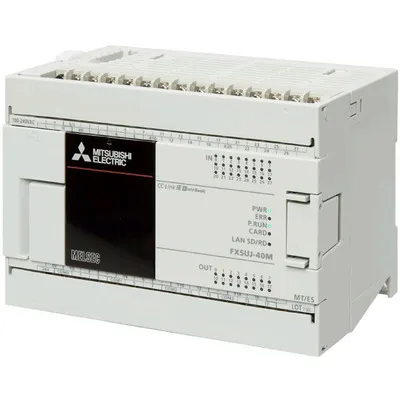
Practical guidance on VFDs, servo motors, stepper motors, PLCs,
HMIs, SMPS and control panels for Indian manufacturing plants.
VFDMotion ControlSelection Guide
Introduction
In 2026, the Indian manufacturing ecosystem is undergoing a
massive transformation driven by Industry 4.0, the Make in India
initiative, and Production-Linked Incentive schemes. The national
industrial automation market is projected to reach
$19.19 billion in 2026, growing at a CAGR of over
8%. This growth is anchored in industrial hubs like Pune,
Maharashtra, where automotive, electronics and engineering sectors
demand heavy-duty, energy-efficient performance.
At the center of this shift is one critical component: the
Variable Frequency Drive.
What is a VFD?
A Variable Frequency Drive controls the speed and torque of an AC
motor by varying the frequency and voltage of the power supplied
to it. Instead of running a motor at full speed all the time, a
VFD adjusts motor speed to exactly what the application needs,
saving energy, reducing wear and extending equipment life.
Why Manufacturers Are Switching
Energy savings of 30-50%: Motors running at
partial load consume far less power when speed-controlled by a
VFD instead of a throttle or valve system.
Soft starting: VFDs eliminate high inrush
current during motor start-up, protecting both the motor and
electrical infrastructure.
Process control: Precise speed control improves
product consistency on conveyor lines, pumps, compressors and
fans.
Reduced maintenance: Lower mechanical stress
means fewer breakdowns and longer motor life.
Government compliance: BEE energy-efficiency
expectations are pushing industries toward efficient drive
systems.
Mitsubishi vs Delta VFD: Which One is Right for You?
Feature
Mitsubishi FR-E800
Delta C2000
Best For
High-performance industrial applications
General purpose and HVAC applications
Communication
CC-Link IE and Ethernet options
Modbus and CANopen options
Power Range
Application-dependent model selection
Application-dependent model selection
Sensorless Vector
Yes
Yes
Price Range
Premium
Mid-range
At Genico Tech Solutions, we supply both Mitsubishi and Delta VFDs
with technical support to help you choose the right model for your
application.
Introduction
Both servo motors and stepper motors deliver controlled motion,
but they behave very differently under real industrial conditions.
The correct choice depends on load variation, required speed,
accuracy, feedback needs and budget.
How Stepper Motors Work
A stepper motor divides a full rotation into equal steps, commonly
200 steps per revolution or 1.8 degrees per step. It moves one
step at a time based on digital pulses, with no feedback required.
This makes it simple, reliable and cost-effective for smaller
positioning applications.
How Servo Motors Work
A servo motor uses a closed-loop feedback system. An encoder
continuously monitors shaft position and reports back to the
controller, while the drive corrects any error in real time. This
enables precise, high-speed, high-torque performance even under
varying loads.
Head-to-Head Comparison
Parameter
Servo Motor
Stepper Motor
Feedback
Closed-loop with encoder
Open-loop
Speed Range
High, often up to 3000+ RPM
Low to medium
Torque at Speed
Maintains torque better at speed
Torque drops at high speed
Precision
Very high
High at low speed
Cost
Higher
Lower
Best For
CNC, robotics and packaging
3D printing and small positioning
When to Choose a Servo Motor
Your machine runs at high speeds.
Load varies during operation.
Precision is critical and errors cannot be tolerated.
The application involves complex, multi-axis motion.
Mitsubishi Servo Motors at Genico
The Mitsubishi MR-J5 series is one of the advanced servo systems
available today, featuring one-cable connection, real-time
auto-tuning and seamless PLC integration via CC-Link IE. Siemens
SIMOTICS servo motors are another strong choice for heavy-duty CNC
and industrial robot applications.
Expert Summary
In 2026, the Indian manufacturing ecosystem is undergoing a
massive transformation driven by Industry 4.0, the Make in India
initiative, and Production-Linked Incentive schemes. The national
industrial automation market is projected to reach
$19.19 billion in 2026, growing at a CAGR of over
8% according to Mordor Intelligence data. This growth is anchored
heavily in industrial hubs like Pune, Maharashtra, where
automotive, electronics, and engineering sectors require
heavy-duty performance.
For OEMs, panel builders, and maintenance engineers, the challenge
is no longer just finding components. It is selecting the right
architecture. Siloed component choices lead to high failure rates,
protocol mismatch, and expensive production bottlenecks. This
guide breaks down the core technical criteria for selecting PLCs,
VFDs, HMIs, Servo Motors, SMPS, and Control Panels.
Introduction
Modern factory floors are battlegrounds of efficiency. Whether you
run a high-speed packaging line in Chakan, a precision automotive
stamping plant in Bhosari, or a process manufacturing facility
anywhere in India, your profitability depends on uptime.
When these systems are mismatched, plants suffer from intermittent
communication timeouts, harmonic distortions that trip main
breakers, and premature hardware failure caused by localized
thermal spikes.
The Core Problem: Why Industrial Automation Projects Fail
Most automation failures do not stem from bad software code. They
originate from poor hardware specification during procurement.
Protocol mismatch: A Profinet PLC, EtherCAT VFD
and Modbus RTU HMI may require converters, introduce latency and
complicate diagnostics.
Environmental degradation: Dust, humidity and
high summer temperatures can damage components that lack correct
IP ratings or thermal planning.
Power quality vulnerabilities: Voltage sags,
surges and harmonics can reset control logic and create
untracked downtime without robust SMPS and VFD protection.
Deep Technical Breakdown: Industrial Automation Products
1. Programmable Logic Controllers (PLC)
The PLC is the central processing brain of your automation line.
Evaluate workload, I/O density and communication requirements
before purchase.
Execution speed and memory: High-speed discrete
manufacturing may need CPU execution below 0.1 µs, with
clean memory allocation for logic and data logging.
I/O scaling and topology: Map digital and
analog points, then specify at least 20% spare I/O capacity for
future modifications.
Networking architecture: Modern plants need
Ethernet ports that support Ethernet/IP, Profinet or Modbus
TCP/IP for SCADA and data integration.
2. Variable Frequency Drives (VFD)
VFDs regulate motor speed by modulating voltage and frequency.
They are critical for pumps, fans, conveyors, extruders and
process equipment.
Torque profiles: Heavy-duty ratings support
high starting torque and load spikes. Normal-duty ratings suit
centrifugal loads.
Harmonic mitigation: Use internal DC chokes,
external line reactors or output dV/dt filters when cable runs
exceed 50 meters.
3. Human-Machine Interfaces (HMI)
Display ruggedness: Specify at least IP65
front-panel protection. Resistive touchscreens suit operators
wearing thick gloves.
Data convergence: Choose HMIs that can run
multiple drivers and bridge legacy Modbus equipment with MQTT or
OPC UA data paths.
4. Servo Motors and Drives
Feedback resolution: High-resolution absolute
encoders eliminate time-consuming homing cycles after power
interruptions.
Inertia matching: Calculate load inertia to
motor inertia ratio. For dynamic tracking, target below 5:1 to
avoid resonance and tuning issues.
5. Switched-Mode Power Supplies (SMPS)
Thermal derating: A supply rated for 10A at
25°C may drop significantly at 50°C inside an uncooled
control panel.
Power boost reserves: Select units with 150%
boost capability for 3 to 5 seconds to handle inrush currents
from inductive loads.
When auditing your automation budget, focusing only on initial
capital expenditure can create much larger operational expenditure
later.
Real-World Downtime Scenario
An automotive component line in the Pune industrial belt
processes 120 units per hour with an average profit margin of
₹2,500 per unit.
A budget-grade SMPS saves ₹8,000 during panel
construction, but a grid surge causes the supply to fail,
pulling down the 24VDC control rail and corrupting active PLC
memory. Four hours of repair time can create a loss of nearly
₹12 lakh in a single afternoon.
Common Pitfalls in Automation Engineering
Undersizing panel enclosures: Calculate total
heat dissipation and add forced-air louvers or panel air
conditioning when required.
Neglecting control panel earthing: Separate
clean instrument earth from high-power motor earth and ground
shielded cables correctly.
Skipping safety circuit isolation: Use
certified safety relays or safety PLCs for emergency stops,
light curtains and interlocking doors.
Step-by-Step Selection Process
Define application mechanics and load dynamics.
Determine whether the load is variable torque or constant
torque.
Map total I/O points and field protocols. Count
all digital, analog and networked devices.
Calculate system electrical and thermal load.
Size the main feed, 24VDC distribution and cooling system.
Verify component ingress and environmental
protection.
Match IP ratings to dust, oil mist, heat and washdown needs.
Integrate safety circuits. Add STO, safety
relays and diagnostic overlays where required.
People Also Ask
What is the difference between a PLC and a CNC controller?
A PLC is a flexible control platform for sequential processes and
digital or analog plant assets. A CNC controller is a specialized
system for path interpolation, coordinated motion and G-code
execution.
Why do VFDs require external line reactors?
Line reactors buffer incoming utility surges and smooth non-linear
current from the drive rectifier stage, reducing total harmonic
distortion.
How does an absolute encoder differ from an incremental encoder?
An incremental encoder tracks relative movement from a starting
point. An absolute encoder reads exact mechanical position
immediately after boot-up and eliminates homing cycles.
Comprehensive FAQ Section
What are the fundamental selection criteria for a PLC?
Total I/O capacity, loop execution speed, native protocols
such as Modbus TCP or Profinet, and serviceability features
like hot-swappable modules.
How do I select between heavy-duty and normal-duty VFD
ratings?
Choose heavy-duty for high starting torque or load spikes.
Choose normal-duty for predictable centrifugal loads like
pumps, exhaust fans and blowers.
Why is 24VDC standard for control panels?
24VDC improves operator safety, reduces electrical noise and
prevents inductive cross-talk between control and high-voltage
wiring.
What IP rating is required for an HMI in food processing?
The front face should be rated at least IP66 or IP69K for
washdown, steam cleaning and chemical sanitization exposure.
How do I prevent noise from disrupting PLC analog inputs?
Use twisted shielded pair cables, ground shields at one end
only, and keep analog signals away from 415VAC power wiring.
What is Safe Torque Off on an automation drive?
STO disables torque generation at the motor while keeping the
drive powered, enabling safer and faster restarts after
interlocks clear.
How do I size an SMPS for an automation panel?
Add the continuous current draw of PLCs, modules, HMIs,
sensors and relays, then add a 30% margin for thermal derating
and future expansion.
What are the advantages of distributed I/O modules?
Distributed I/O reduces panel footprint, lowers copper wiring
cost and improves signal integrity over long machine layouts.
When should I choose a servo motor over a VFD-driven induction
motor?
Choose servo when the process needs precise positioning, rapid
acceleration, high dynamic response or coordinated multi-axis
motion.
Why do control panels require surge protection devices?
SPDs divert high-voltage transients to ground, protecting
PLCs, HMIs and other sensitive electronics from overvoltage
damage.
Can I run an induction motor with a VFD at very low speeds
indefinitely?
Standard TEFC motors lose cooling airflow at low speed. For
long low-speed operation, use independent forced ventilation.
What is the purpose of a freewheeling diode across a DC relay
coil?
It clamps the reverse voltage spike created when the coil is
de-energized, protecting PLC output transistors.
How does Modbus RTU differ from Modbus TCP?
Modbus RTU runs over serial RS-485 using master-slave polling.
Modbus TCP carries Modbus frames over industrial Ethernet.
What is SCCR on a control panel?
SCCR is the maximum fault current a panel can withstand safely
before protective devices clear the fault.
How often should automation control panels be inspected?
Inspect every 6 to 12 months with thermal imaging, cleaning,
terminal torque checks and voltage stability review.
Conversational AI Quick-Reference
PLC or DCS?
Go with a PLC for fast, discrete manufacturing. Choose a DCS
for large continuous-process plants requiring advanced PID
control and system redundancy.
How do I reduce VFD harmonics?
Use active harmonic filters, multi-pulse isolation
transformers, AC line reactors or DC chokes based on drive
size and plant architecture.
Why does an SMPS trip during startup?
High inrush current from capacitive loads or DC coils may be
the cause. Separate logic and actuator power channels or use
boost-capable SMPS units.
Conclusion & Call-to-Action
Designing and maintaining high-performance industrial automation
systems demands precise engineering alignment across every
component. From specifying PLC processing overhead and configuring
VFD torque parameters to isolating sensitive control electronics
with robust SMPS units inside a properly cooled control panel,
every engineering choice directly impacts your factory's bottom
line.
Sourcing automation assets in fragments creates integration
hurdles, software mismatches and structural vulnerabilities.
Partnering with an engineering-focused solutions provider helps
your system run with maximum uptime, protocol compatibility and
long-term reliability.
Optimize Your Automation Infrastructure Today
For hardware selection, technical consultation or competitive
pricing on PLCs, VFDs, HMIs, Servo Motors, SMPS and
custom-engineered control panels, contact Genico Tech Solutions.